News
The Rival Pod: Episode 8 with Rich Calacci, Chief Revenue Officer at Overtime
What Three Decades in Sports Media Can Teach You About the Next Decade
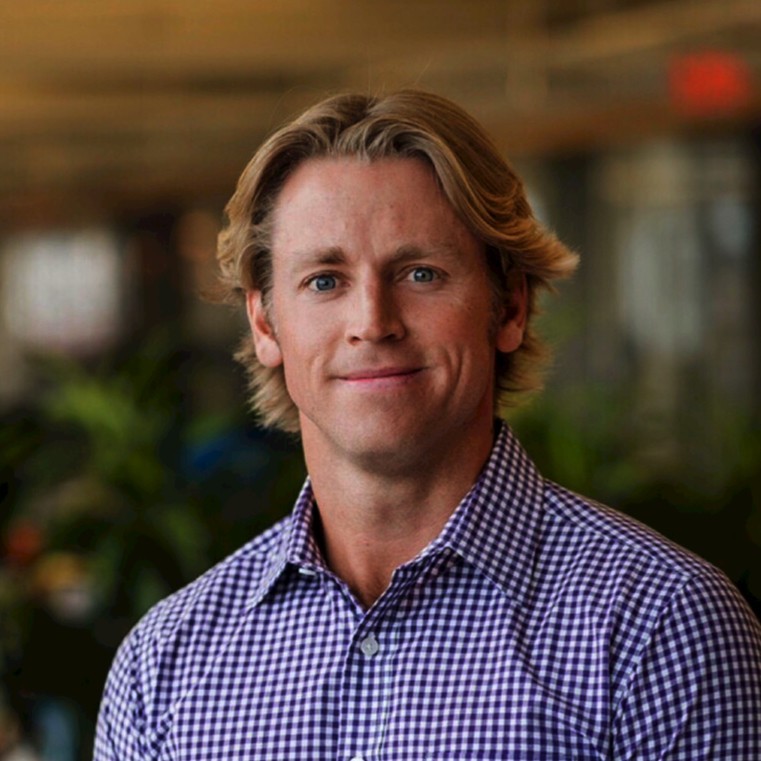
With sports media fragmenting across more screens, creators, and formats than ever before, we sat down with someone who's lived through the entire arc. Rich Calacci, Chief Revenue Officer at Overtime.
Listen Here
On The Rival Pod, Rich Calacci, Chief Revenue Officer at Overtime, broke down how 30 years across CBS, Turner, Pluto, and now Overtime have shaped his read on where brands, athletes, and fans are heading next.
From cheering for an OTE alum in a Sixers jersey to seeing the NFL Draft become a million-person event, Rich shared the on-the-ground evidence behind one of the most powerful brands in Gen Z and Gen Alpha sports.
Episode 8 of the Rival Pod
Below are the key takeaways, straight from Rich.
From CBS Sports to Overtime
Rich describes his career as both logical and illogical at once. He went to graduate school at Ohio University because the 1991 job market was that bad, calling the decision a coping mechanism for the moment. It turned out to be one of the best calls he ever made. From there the trajectory ran through the Mobil Cotton Bowl Classic, Intersport Television in Chicago, MLB's Baseball Network, 18 years at CBS Sports, Bleacher Report, Turner, and Pluto TV.
The recurring punchline: every company he joined kept getting acquired by something that pulled him back into CBS's orbit. Bleacher Report sold to Turner. Turner entered a joint venture with CBS. Pluto got bought by Viacom, which merged with CBS. To finally break the loop, in 2020 Rich left Manhattan and joined Overtime in Brooklyn.
For Rich, Overtime is what owning Gen Z attention looks like at scale. Mention the brand to a 13 to 34 year old sports fan and you get the same instant recognition a previous generation had for Dairy Queen or Levi's.
The Permission to Not Know
At CBS, Rich's job came with a baseline expectation. Know everything. Every show in the primetime lineup. What was on at 10 p.m. on a Thursday. The full grid. Expertise was the product you delivered.
At a venture-backed startup, that expectation flips. The unlock isn't pretending to know every influencer, format, or creator across a landscape that has tens of thousands of originators where 20 years ago there were fewer than 100. The unlock is being willing to say you don't, and asking to learn.
"It was not okay for me not to know every show in CBS's primetime lineup. But it's totally fine when you bring up somebody making inroads in social media that's new to you. That takes a leap of faith. It's a very different culture."
Rooting for the Player
Rich’s at a Knicks-Sixers game with a close friend, cheering for Josh Hart and Jalen Brunson like any Knicks fan. Then Dom Barlow, an Overtime Elite alum now playing for Philadelphia, makes a great play, and without hesitation, Rich stands up and cheers.
The section turns and looks at him. Why are you cheering for the Sixers? I'm not, he tells them. I'm cheering for Dom Barlow.
Multiply that by every OTE and OT7 alum now in the pros. 26 former OTE athletes in this year's March Madness Final Four. Five former seven-on-seven athletes drafted in the first round of the NFL. The fan bond gets built when an athlete is 14, 15, 16 years old, and it follows them wherever they go.
"It's identification with LeBron James first, and now he's a Laker. It's more about being a LeBron fan than being a Lakers fan. That's the trend that will be sustained for the next couple of decades."
The Vehicle to Fandom
Rich's macro read starts with the most basic question: when does a kid actually become a fan?
It used to be the first car at 16. The vehicle was the freedom, the identity, the first major purchase. Now it's the first handset, and it shows up much younger. That phone is where kids meet sports, pick teams, find athletes, and build identity around all of it.
The NFL Draft is Rich's proof point. 150,000 fans in Detroit. 300,000 in Pittsburgh. A projected million in Washington next year. Nobody is watching four to six straight hours of broadcast across three days. They're checking in digitally to see which player went where.
The same logic is why Rich believes Overtime's ceiling is global. An urban basketball fan in Manila, Tokyo, Madrid, and Brooklyn shares more with each other than any of them do with someone in Topeka.
"Overtime sits on a global stage. We're not trying to get on your local cable system. We're trying to get on your phones, and those phones can be anywhere in the world."
The Lightning Round
Favorite athlete growing up? Number 34, Walter Payton.
Favorite athlete today? Caleb Williams. Has Chicago believing again.
Favorite video game? NBA 2K.
Best live sports moment? Bulls vs. Celtics at the United Center, mid 1990s. Pizza Hut had a promotion: free pizza the next day if the Bulls hit 110 points. With nine seconds left, the Bulls had 107. Jud Buechler grabbed the rebound, dribbled up, and launched a half-court three. He hit it. The Bulls got to 110. He ran up the court pretending to make a pizza. The whole arena was chanting pizza, pizza, pizza. The Bulls lost the game. It didn't matter.
Favorite city for a game? New Orleans for a Super Bowl. You can walk to the stadium.
One rule you’d change? Eliminate goaltending in the NBA. The rule existed because Kareem had an unfair advantage at the rim. Today every player in the league can reach the rim. Let them defend it like in hockey or soccer.
Hot take? "Crypto is going to play a pivotal role in how college athletic departments fundraise. You'll see schools like Notre Dame, Ohio State, Florida, and Vanderbilt minting their own coins for alums and using them as currency inside the stadium."